
Poem in Rabbit


Andrew’s poem “Zuiho-in Zen Temple, Kyoto” has been published in the latest issue (# 33, 2021) of Rabbit: a journal for nonfiction poetry.

The poem is dedicated to the memory of Sorin Otomo, a warlord who founded the Zen temple in Kyoto in the sixteenth century AD and later converted to Christianity.

In recognition of Sorin’s Christian faith, one of the dry landscape gardens at the temple has seven stones positioned to from the shape of a cross.

Fay Zwicky’s Poems

Poems by the late Australian poet and academic Fay Zwicky have been posted on this website.

Fay and Andrew were friends, although their contact was mostly limited to book launchings and literary gatherings.

(Andrew and Fay’s association stretches back to the 1980s, when Fay recommended Andrew to the painter Donald S. Green to provide the text for a book on The Swan Waterways. Sponsored by several wealthy business men, Andrew and Donald produced a one-off art-object book, which the sponsors subsequently sold for $250,000 to another business man.)

On 6 June 2015, Andrew gave the launching speech for Shane McCauley’s poetry collection, Trickster, and Fay was among the audience. During a conversation after the launch proceedings, Andrew asked Fay if he could post some of her poems on his (this) website. Fay readily agreed, giving Andrew freedom to post whichever poems he liked.

Albeit belatedly, Andrew has now chosen and posted six of Fay’s poems, which can be read here.


Review of Abundance: New and Selected Poems


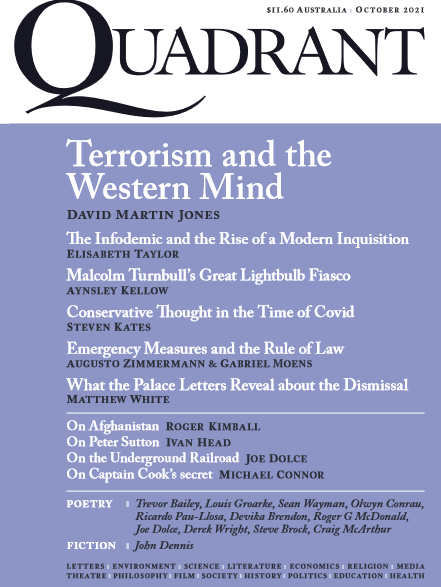
The October 2021 issue of Quadrant magazine contains a review of Andrew’s latest book, Abundance: New and Selected Poems (Cascade Books, USA).

Under the heading “Searching the Poetic”, Ivan Head reviews four collections of poetry, Abundance being the second in the set. His generous and erudite review begins:


Metre and notes also need not be far away when turning to Andrew Lansdown’s wonderful book Abundance: New and Selected Poems. Not that the pursuit of either need detract from the splendid accessibility of this large and carefully chosen collection. For instance, “On Poetry”, the second poem, and reprinted from Counterpoise (1980), carries a dedication to William Hart-Smith, who had a significant influence on West Australian poets. Immediately, one can use the marvels of the net to track material on Hart-Smith and the interaction between these two and other poets before returning to the poetry itself. At the end of “On Poetry”, Lansdown writes of his infant son, not yet walking but sitting on his knee as he talks with Hart-Smith:

my son …

spasmodically stops
our talking with

a short sigh,
and lifts and drops

his foot rhythmically
on the flat of my thigh.

Lansdown is a poet of the embodied and deeply-observed world and, in the end, metre and rhythm in poetry will have more than a close relationship to the beating heart, the dancing feet and all human movement. It is a kind of incarnationalism. Auden’s persona in “The Shield of Achilles” was also looking for figures dancing. To read Lansdown’s new book is to become open to a much wider world.

One earlier publication, Abiding Things, is not represented in this volume. I note that critics of that book said significant things about Lansdown. Les Murray wrote in the Sydney Morning Herald: “He espouses … an aesthetic of small observations”. Rod Moran in the Fremantle Arts Review wrote of Lansdown “lifting the veil of familiarity from the world”, and Philip Salom in the West Australian called him “an imagist of the highest order”.

Micro-observation can go hand-in-glove with a larger metaphysic, even an off-stage metaphysic that is made by the poet’s mastery of the art to serve the poetry, and where the poetry is not a convenient footstool for other concerns that in the end dominate. In that sense of micro, there is something dense and condensed in Lansdown’s poems, a vision lurking. I’m happy to call Lansdown a metaphysical poet. Blake could write in an observational-micro that evoked London in detail, though perhaps his larger vision became obscure in the longer poems. They became seriously esoteric, seriously gnostic. …

Read the rest of Ivan Head’s review of Abundance here.

Poem in The Mozzie

The Mozzie has published one of Andrew’s poems in its September 2021 issue (Vol. 29, Issue 4). The poem, “Loss”, is loosely based on the villanelle, employing its line-repetition pattern and its stanzaic structure, but not its rhyme pattern.

2 poems in inScribe

Andrew has 2 poems in the August 2021 issue (Issue 02) of inScribe: Journal of Creative Writing — “Worship with Water”, a set of 4 tanka, and “Kilter”, a set of 3 haiku. The first 2 tanka in “Worship with Water”, which is set at Hozen Temple in Osaka, Japan, are:

            i
In the temple yard
an old man handpumps water
from a covered well
first for his own ablutions
then for the god’s libations.

…………ii
Ugly with fury,
the sculptured face of Fudo,
deity of fire …
With their water offerings, do
worshippers quench or fuel his ire?

            © Andrew Lansdown

Shortlisted but short of a win

Andrew’s shortlisted book, Abundance: New and Selected Poems, did not win the 2021 Australian Christian Book of the Year Award. What were the judges thinking!

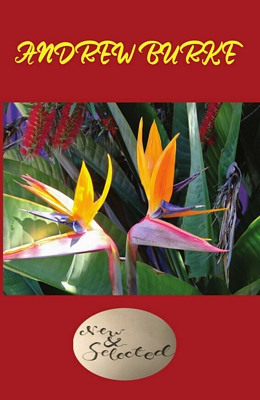
But seriously, congratulations to Stephen McAlpine for winning the Award with his book, Being the Bad Guys.

Interestingly, of the ten books shortlisted for the Australian Christian Book of the Year Award, Andrew’s Abundance was the only poetry collection. The other nine books were all non-fiction works of a theological, apologetic, pastoral or biographical nature. With such a wide variety of genres in the one award, the judges’ task of selecting a winner must have been very difficult.

Concerning Abundance, the Award judges said:

“Andrew Lansdown has spent a lifetime observing, recording, honing and perfecting his art. This collection displays a masterful poet of form and image at home among his family, kingfishers, grasshoppers, puddles and his Lord and Saviour. Play and discipline. Joy and melancholy. Abundance is exquisite, delightful and always powerful.”

Read more about Abundance on this website here. Abundance can be purchased from Koorong Books or through this website, here.

Poem in Quadrant

Andrew’s tribute poem for the late Hal G.P. Colebatch, “Vikings”, was published in the September 2021 issue of Quadrant.

The poem is reproduced in full in an earlier post here, soon after it was first published in The Weekend Australian in March 2020.

It is fitting that this tribute should now appear in the pages of Quadrant, a magazine that regularly published Hal’s poems, stories and essays for over 40 years.

The poem reflects Hal’s passion for the sea and seafaring, his preoccupation with heroism and courage, and his commitment to the Christian faith. In keeping with the Viking analogies, the poem employs the old Anglo-Saxon and Norse poetic techniques of alliteration and kenning.

Abundance shortlisted for Australian Christian Book of the Year

Andrew’s latest poetry collection, Abundance: New and Selected Poems, published in the USA by Cascade Books, an imprint of Wipf and Stock Publishers, has been shortlisted for the 2021 Australian Christian Book of the Year Award. The Award is organised by The Society for Promoting Christian Knowledge Australia Incorporated (SparkLit), and further details can be learned from the official website, SparkLit – Igniting Christian Writing.

The winner will be announced on 2 September 2021.

You can read several sample poems from Abundance here. Go here to purchase a copy.

Poems in The Mozzie

The last two issues of The Mozzie each contain one of Andrew’s poems.

His poem “The Biblical Maples”, a set of four tanka, is in the June 2021 issue (Vol. 29, Issue 1) of The Mozzie.

His poem “Ascendant Maple”, a set of three light-hearted haiku, is in the July 2021 issue (Vol. 29, Issue 2) of The Mozzie.