Andrew interviewed in the West Australian

Collections of verse in a human keyThe Books Editor of the West Australian newspaper, William Yeoman, interviewed Andrew and three other poets whose books will be released by Fremantle Press this week.
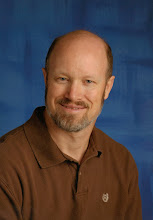
Excerpts of the interviews appeared in an article titled “Collections of verse sung in a human key” in the West Australian on Tuesday, 5 July (“Today” section, page 7).

Read the full article here: http://au.news.yahoo.com/thewest/entertainment/a/-/arts/9786754/collections-of-verse-in-a-human-key/

Photograph (by Simon Santi for the West Australian) from left to right: Andrew Lansdown, Kevin Gillam & Michael Heald

Invite to the lauch of Two Poets

Fremantle Press will launch Two Poets on Thursday 7 July.
As the title indicates, the book features the work of two poets – Andrew Lansdown and Kevin Gillam.
Each poet has contributed a 100-page collection: Andrew’s is called The Colour of Life, while Kevin’s is called Songs Sul G.
Learn more about Two Poets from the Fremantle Press website.
Two Poets will be launched at the Fremantle Arts Centre, 1 Finnerty St, Fremantle, at 6.30 pm on Thursday 7 July. Come along if you can!

Poetry reading at Moon Cafe

Andrew has been invited to read at the Perth Poetry Club on Saturday, 9 July. Come and hear him read poems from his latest collection, The Colour of Life in Two Poets (Fremantle Press, 2011).

The Perth Poetry Club meets at the Moon Cafe in William Street, Northbridge, on Saturdays between 2.00 – 4.00 pm.

Poems on bushwalking website

Dave Osborne recently requested permission to use some of Andrew’s poems on his WalkGPS website, which is dedicated to bushwalking in the Perth (WA) region. He has now posted two of Andrew’s poems – “Desertion” and “Tanka”. To read them, follow the links in the 7 June 2011 “What’s New” entry at http://www.walkgps.com/what’s{622e8f302d1fb91812edd8a3c16e0696cd1f0e82e697b7a9609cca725af619bb}20new.htm  While there, take a cyberwalk through the site: it is quite impressive.

Five poems in Quadrant

Quadrant magazine has published five of Andrew’s poems in its May 2011 issue. One of the five is a gunsaku, “Seven Birds”, consisting of seven tanka. The first of the seven bird tanka is written in slant (half) rhyme and reads:


Bird and Bull


The dotterel,

stalking, sniping—so little

by the muzzle

and muddy hoof of the bull

drinking at the dam’s puddle.


          © Andrew Lansdown


Read the remaining six tanka in “Seven Birds” on the Quadrant website: http://www.quadrant.org.au/magazine/issue/2011/5/seven-birds


Andrew’s other poems can also be read on the Quadrant website: 

“In Dependence” –

http://www.quadrant.org.au/magazine/issue/2011/5/in-dependence

“Wheatbelt Willy-Willy” and “The Gravity of the Slight” –

http://www.quadrant.org.au/magazine/issue/2011/5/two-poems

“Spores” –

http://www.quadrant.org.au/magazine/issue/2011/5/seven-birds

Getting the Word Out Poetry Evening

The City of Armadale is hosting a Getting the Word Out Poetry Evening on Tuesday 24th May, 6.30 – 8.30 pm. Andrew is one of several poets invited to read for the event. Admission is free and all are welcome.

Andrew to tutor Advanced Poetry Workshop

Peter Cowan Writers’ Centre (PCWC) is running a series of 10 Advanced Poetry Workshops throughout 2011.

Andrew is one of nine professional poets invited to be a facilitator for one of the workshops. Other facilitators include Shane McCauley, Lucy Dougan, Andrew Burke and Dennis Haskell.

The Advanced Poetry Workshops are a new initiative by PCWC aimed at assisting already accomplished poets to move to a new level of achievement.

Last year, applicants had to submit five recent poems to PCWC, to be assessed by Professor Andrew Taylor (who initiated the Workshops and is also one of the facilitators). Twelve poets were chosen from over 30 applicants to attend 10 sessions on the second Saturday of each month from February to November.

Andrew’s workshop will take place on Saturday 14th May and will cover “Alternative Poetic Forms”. The synopsis of his workshop reads:

TS Eliot claimed that one poet is superior to another primarily on the basis of his or her critical faculties. Writing in traditional poetic forms supports and strengthens our critical faculties by providing objective guidance and goals. It also enhances our creativity by prompting us to think in ways that are new to us. This workshop will focus primarily on the traditional Japanese poetic forms of haiku, gunsaku, tanka and choka, all of which are conducive to contemporary descriptive, reflective and imagist poetry.

Comment by John Jenkins

Writing in Island magazine, the Australian poet John Jenkins recently made the following observations about Andrew and his poem “Leaf and Load”:

Andrew Lansdown struck me, too, as being particularly gracious to his fellow readers. Sympathetic and sensitive, he was always interested in how a poem someone read came about, its inspiration and means; its sources and resources. He had an acute ear and was, clearly, a marvellous listener. He showed me a poem of his, “Leaf and Load”, which I have used in creative writing workshops: a model of direct observation, about a leaf which bends under the weight of a swollen droplet of water during a storm. It is simple, yet exquisite, Zen-like in its clarity and attention to detail. For a second, this poem communicates what we know to be impossible: the direct apprehension of subject matter—a leaf bowed by a rain-drop—somehow unmediated by poet, poem or language; as if artifice could simply erase itself, leaving only the presence of reality. In my opinion, Lansdown remains the doyen, in Australia, of this sort of exquisite, small-scale, nature poem. Easy to attempt, devilishly hard to do!

This is an excerpt from John Jenkins’ recollections of the Tasmanian Poetry Festival in 1994, written to celebrate the Festival’s 25th anniversary, and published as part of a multi-part essay, “Written in Silver: The Tasmanian Poetry Festival”, published in Island, No. 121, Winter 2010, pp. 50-51.

The poem, “Leaf and Load”, to which John Jenkins refers is:

Leaf and Load

.

The rain is breaking its phials

on the ornamental plum. From

the verandah I choose a leaf,

.

glistening with wet, and watch

until each vein becomes a rill

running into the midrib-river

.

and on to the leaf’s tip

where the waters gather in a blister

to weight the leaf downwards

.

by imperceptible degrees. Slipping

from the chlorophyll plane, the rain-

drop hangs from the leaf-tip

.

as a ball-bearing might hang

from the point of a magnet, held

by the barest contact between

.

curve and cusp. Like a miniature

transparent balloon tied by a child

to a tap, the drop swells,

.

bulges with a fragile elasticity,

bowing the leaf with its growing load,

until loosed at last by gravity.

.

Released, the leaf leaps up,

shudders to an easy equilibrium

in the light, impacting rain.

.

           © Andrew Lansdown

First published in the literary magazine Westerly, “Leaf and Load” is included in Andrew’s poetry collections The Grasshopper Heart (1991) and Birds in Mind (2009).
